
No products in the cart.
How to Make Sanjeevani Khaad: The Ultimate Organic Fertilizer & Neem Bio-Pesticide Recipe
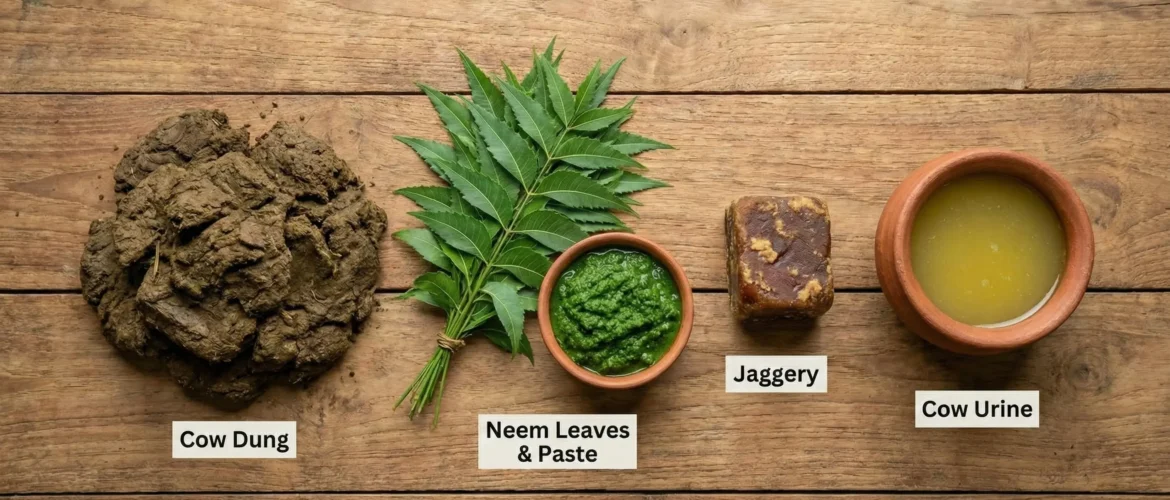
Category: Regenerative Farming / Organic Gardening / DIY Bio-Fertilizers Difficulty: Easy Prep Time: 30 Minutes Fermentation Time: 4–7 Days
In the world of regenerative agriculture, soil health is everything. While the world looks for sustainable solutions, Indian traditional farming offers a potent answer: Sanjeevani Khaad.
Often compared to Jeevamrut, Sanjeevani Khaad is a powerful liquid manure that doubles as a natural pest repellent. By fermenting fresh cow dung with neem leaves and jaggery, you create a microbial culture that revitalizes soil and protects crops from pests without harsh chemicals.
Below is the step-by-step guide to making this bio-stimulant, optimized for both Indian farmers and international permaculture enthusiasts.
Why Use Sanjeevani Khaad? (The Science)
Before you brew, understand the benefits. This mixture is a powerhouse for three reasons:
- Microbial Inoculation: The cow dung provides beneficial bacteria and fungi.
- Microbial Energy: Jaggery provides the carbon/sugar needed for these microbes to multiply rapidly.
- Pest Defense: Neem contains Azadirachtin, a natural compound that repels insects and fights root rot.
Ingredients List
For a 200-Liter Batch
To make authentic Sanjeevani Khaad, you need specific organic inputs.
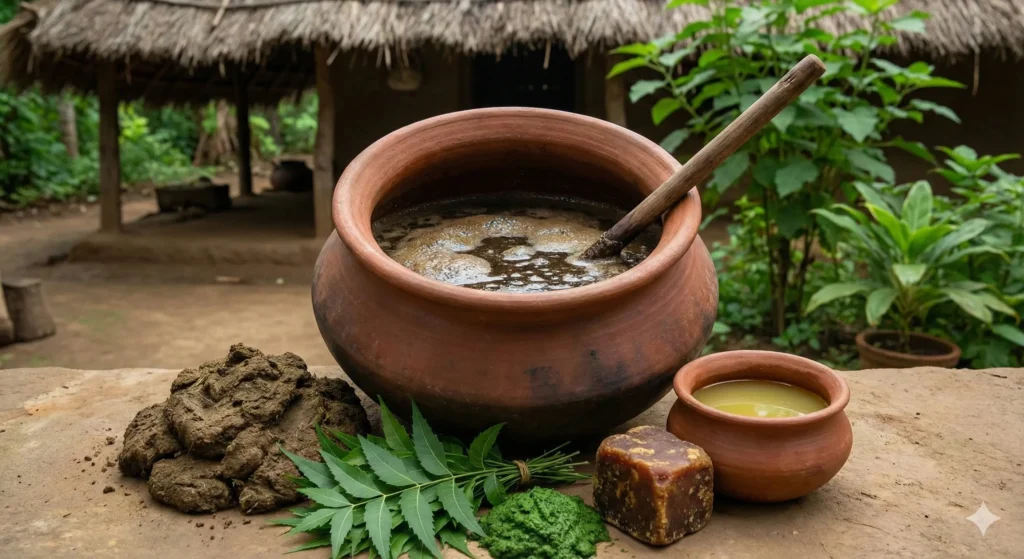
- 10 kg Fresh Cow Dung (Desi Gaay ka Gobar): Ideally from indigenous cows, as their dung has higher microbial density.
- 10 Liters Cow Urine (Gaumutra): Acts as a potent liquid medium and anti-fungal agent. (Note: Water can be used if urine is unavailable, but potency will decrease).
- 1 kg Jaggery (Gud): Must be organic/chemical-free. This is “food” for the bacteria.
- 1–2 kg Neem Leaves (Neem Patti): Fresh leaves are best.
- 1 kg Gram Flour (Besan): Optional but Recommended. This provides protein for the microbes to thrive.
- ~200 Liters Water: To fill the drum.
Step-by-Step Preparation Method
Phase 1: The Mix
- Prep the Neem: Crush the Neem leaves into a paste or chop them very finely. This releases the medicinal compounds into the mixture.
- Dissolve the Sugars: Crush the Jaggery and dissolve it in a small container of water or cow urine first to ensure no lumps remain.
- The Base: In a large plastic drum or earthen pot (Avoid copper or iron containers), mix the 10 kg of fresh cow dung with the 10 liters of cow urine.
- Combine: Add the Neem paste, dissolved Jaggery, and Besan (if using) into the drum with the dung mixture.
- Fill: Add approximately 200 liters of water to the drum.
Phase 2: The Fermentation (Crucial Step)
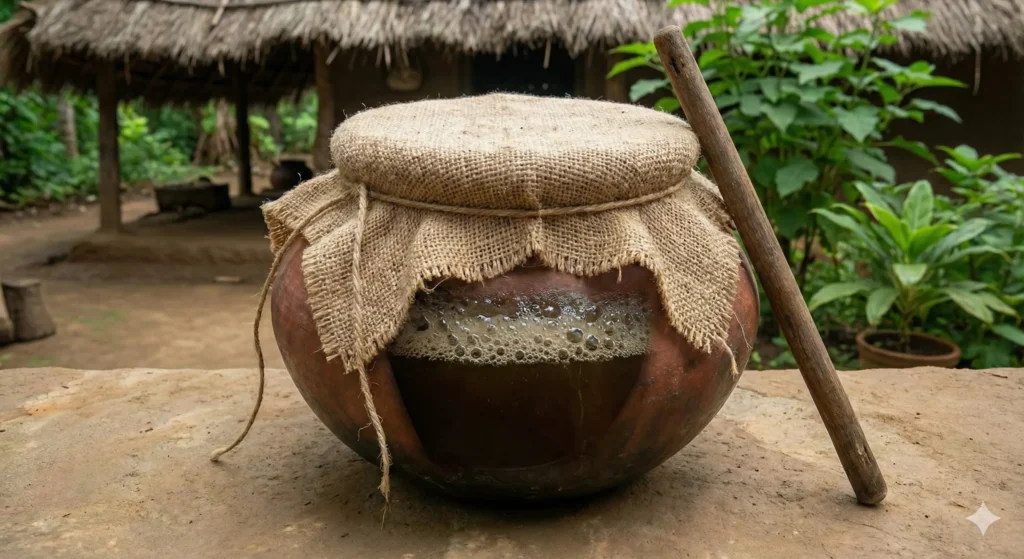
- Oxygenate: Stir the mixture with a long wooden stick in a clockwise direction for 2–3 minutes. This creates a vortex that aids microbial bonding.
- Cover: Place a jute bag or breathable cotton cloth over the drum. Do not seal it airtight; the living microbes need airflow.
- Placement: Store the drum in a cool, shaded area. Protect it from direct sunlight and rain, which can kill the microbes or dilute the mix.
- Daily Maintenance: Stir the solution twice a day (morning and evening). This provides oxygen to the microbes, speeding up fermentation.
How do I know it’s ready? After 4 to 7 days, the mixture will develop a sour, fermented smell (yeast-like) and you may see bubbles on the surface. This indicates the culture is active and ready for use.
How to Apply Sanjeevani Khaad
Once ready, use the solution within 7–10 days for maximum microbial activity.
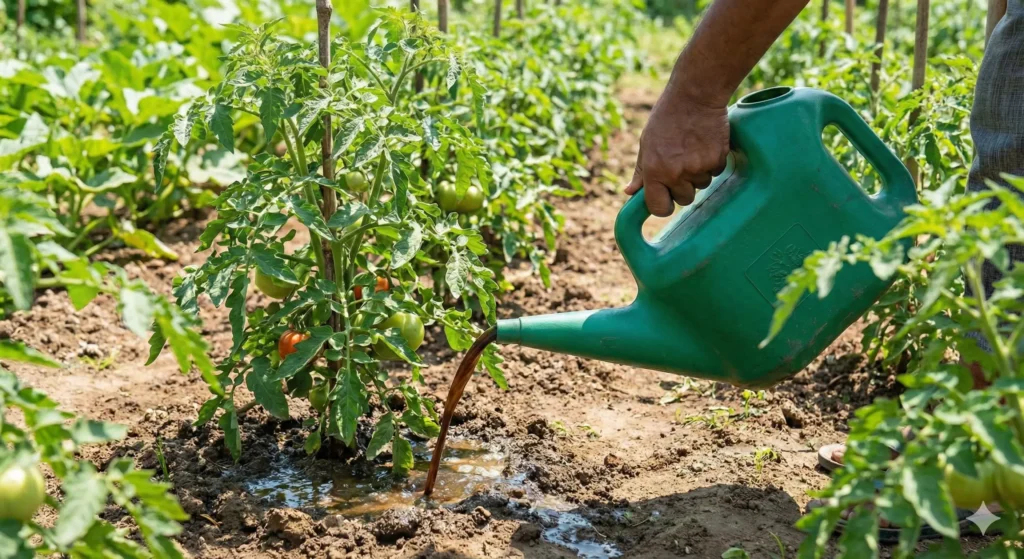
Method A: Soil Drench (Root Fertilizer)
Best for: Boosting soil health, NPK levels, and microbial diversity.
- Application: Pour directly near the root zone or use via flow irrigation (drip tape requires thorough filtering).
- Dosage: Approx. 1 liter of prepared liquid per plant (for large crops) or broadcast over the soil.
Method B: Foliar Spray (Pest Repellent)
Best for: Repelling aphids, mites, and preventing fungal attacks.
- Preparation: You must strain/filter the liquid thoroughly using a fine cloth to prevent nozzle clogging.
- Dilution Ratio: Mix 1 Liter of Sanjeevani Khaad with 10 Liters of Water.
- Timing: Spray on the leaves (coating both top and underside) during the evening hours to avoid leaf burn from the sun.
Frequently Asked Questions (AEO Section)
Q: What is the difference between Sanjeevani Khaad and Jeevamrut? A: They are very similar. Standard Jeevamrut focuses on soil fertility using dung, urine, jaggery, and pulse flour. Sanjeevani Khaad specifically incorporates Neem leaves, making it a dual-purpose solution that fertilizes the soil and acts as a bio-pesticide.
Q: Can I use buffalo dung instead of cow dung? A: In regenerative farming, Indigenous (Desi) Cow dung is preferred because it contains a specific gut microbiome beneficial for soil. Buffalo dung can be used as a substitute, but the microbial count may be lower.
Q: Does this smell bad? A: During fermentation, it will have a strong, sour smell. This is natural and indicates the bacteria are working. The smell dissipates quickly after application in the field.
Q: Can I store Sanjeevani Khaad for months? A: No. Unlike chemical fertilizers, this is a living culture. The microbes will begin to die off after 10–12 days if not fed. It is best to use it fresh.
Key Takeaway: Sanjeevani Khaad is a zero-budget, high-impact tool for regenerative farmers. By turning farm waste into plant food, you close the nutrient loop and reduce dependency on synthetic chemicals.