
No products in the cart.
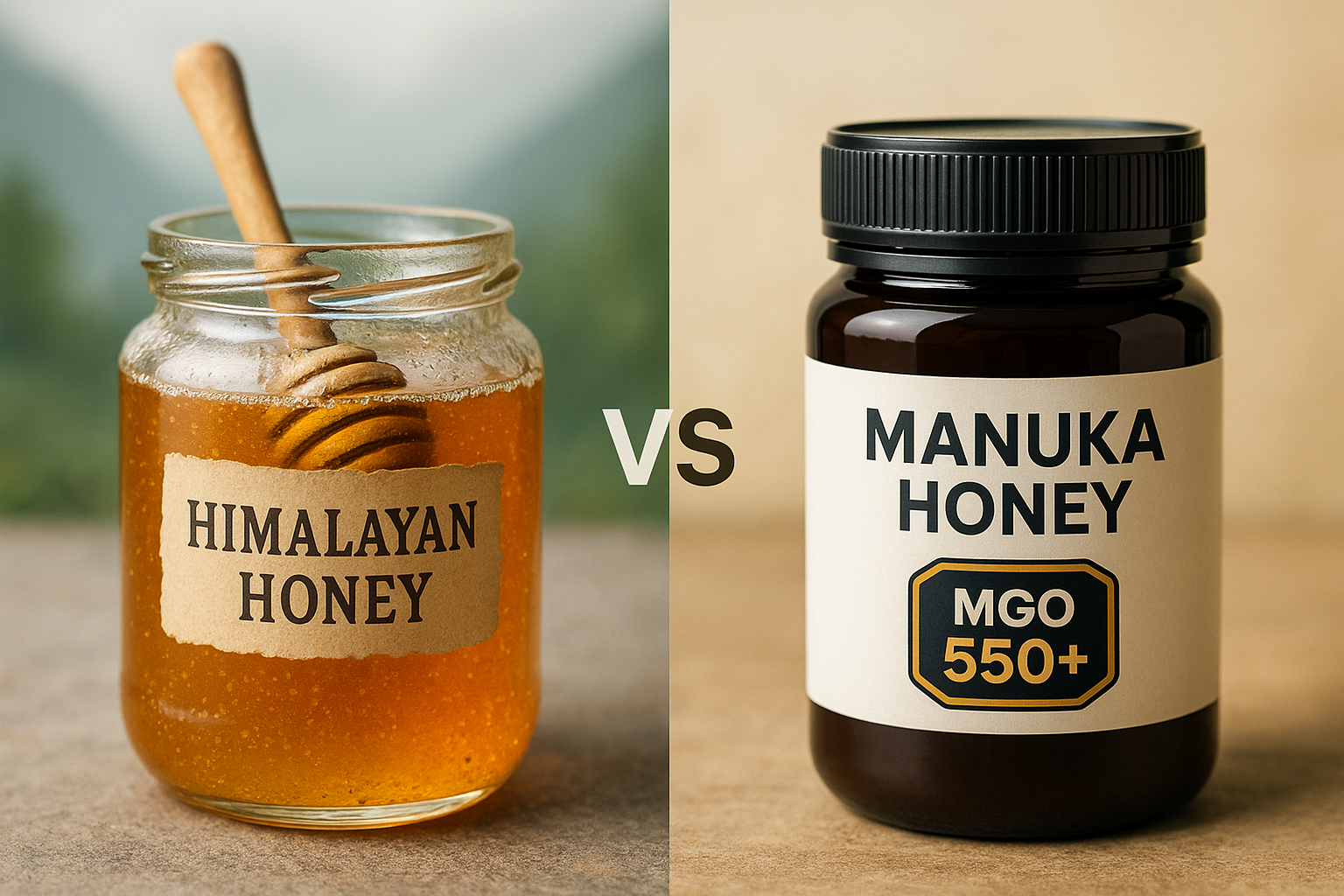
Himalayan Honey vs. Manuka Honey: Which One is Right for You?
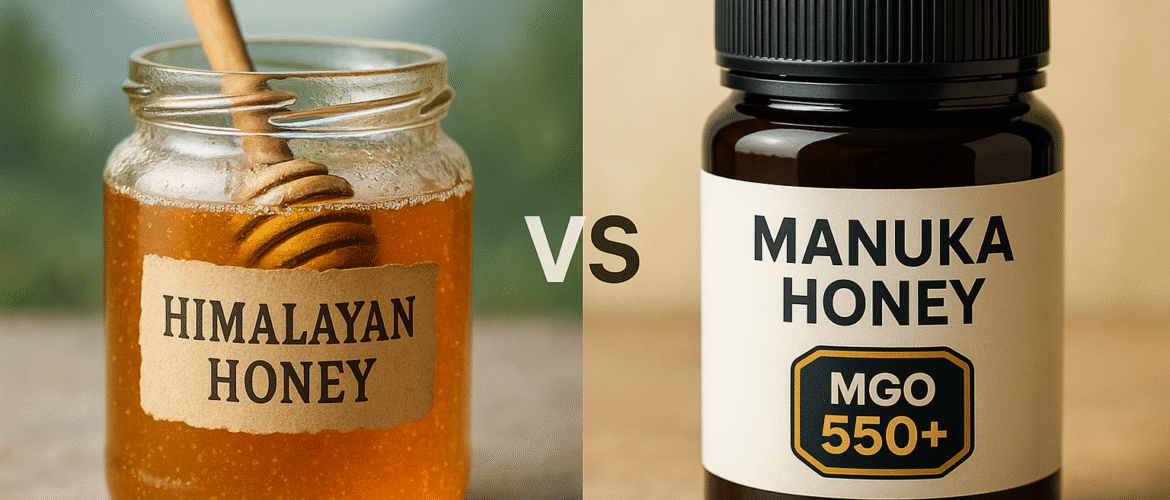
Walking down the honey aisle can be confusing. With so many jars, from light clover to dark buckwheat, how do you choose? But for those of us who really love honey, two names stand out as superstars of the natural world: Himalayan and Manuka.
Both have a reputation for being some of the purest and most beneficial honeys on the planet. But they’re not the same. They’re like two different sides of the same beautiful coin. So, if you’ve ever wondered what the buzz is all about, let’s break it down and help you decide which one is the perfect fit for your pantry.
Manuka Honey: The Scientific Superstar
Originating from New Zealand, Manuka honey has a global reputation, and it’s well-deserved. It’s harvested from bees that primarily pollinate the flowers of the Manuka bush.
What makes it so famous? It’s all about the MGO rating, which stands for Methylglyoxal. Think of MGO as the honey’s “potency score.” The higher the MGO number, the stronger its antibacterial properties are. This is why Manuka honey is often used for targeted wellness, like soothing a sore throat or applying it topically to minor cuts. Its flavor is bold and sometimes described as slightly medicinal or earthy.
Himalayan Honey: A Taste of the Wild
Now, imagine a honey that comes from a place untouched by the modern world: the high-altitude, pristine forests of the Himalayas. Our Himalayan honey is not mono-floral like Manuka. Instead, it’s a “poly-floral” honey, meaning it comes from a diverse array of wildflowers that grow naturally in this unique environment.
This gives it an incredibly rich and complex flavor profile that changes with the seasons. It has a beautiful, golden hue and a taste that’s deep, floral, and subtly sweet. It truly captures the essence of the wild. Because our honey is unprocessed and raw, it retains all the natural enzymes, antioxidants, and trace minerals that are often destroyed in commercial processing.
The Head-to-Head Comparison
So, how do these two powerhouses stack up?
- Purity & Sourcing: Manuka honey’s production is highly regulated and standardized, ensuring a consistent MGO rating. Our Himalayan honey, on the other hand, is a product of its wild, natural environment. Its purity comes from its untouched source and our commitment to traditional, small-batch harvesting. It’s pure by nature, not by a number.
- Flavor & Use: Manuka’s flavor is distinct and strong, which some find too intense for daily use. It’s often best reserved for its powerful wellness properties. Himalayan honey, with its delicate and nuanced flavor, is perfect for everyday use. Drizzle it on your yogurt, stir it into your tea, or use it as a natural sweetener in your cooking. It’s versatile and delicious.
- Price: Due to its rigorous certification process and limited supply, Manuka honey is one of the most expensive honeys in the world. As a small, direct-to-consumer brand, we’re able to bring you a pure, high-quality honey that offers incredible benefits at a more accessible price.
The Final Scoop
So, which one should you choose?
- If you’re looking for a honey with a specific medicinal rating for targeted use, Manuka honey is a great choice.
- But if you want a honey that offers daily wellness benefits, an amazing flavor profile, and the true essence of nature—all while supporting sustainable, ethical sourcing—then Himalayan honey is the perfect addition to your home.
In the end, it’s not about one being better than the other. It’s about finding the right honey for your needs. We believe the unique origin and pure, unprocessed nature of our Himalayan honey make it a perfect fit for a healthier and more flavorful life.