No products in the cart.
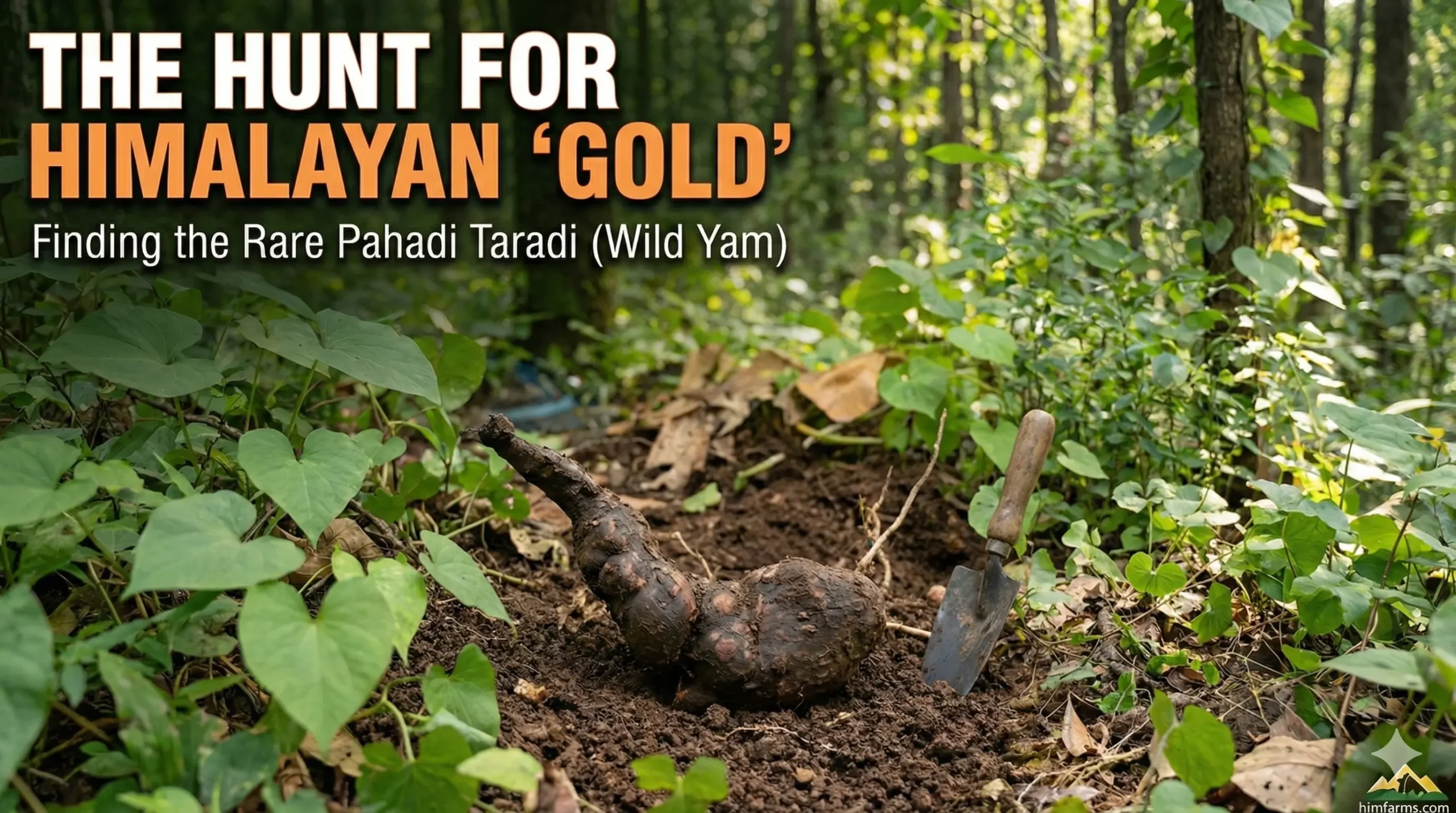
Unearthing Himalayan “Gold”: The Hunt for the Rare Pahadi Taradi (Wild Yam)
Deep in the forests of the Western Himalayas, hidden beneath layers of rich soil and fallen leaves, lies a traditional treasure that requires patience, strength, and a keen eye to find.
Last week, we took you live on our YouTube channel for a genuine foraging adventure. Our mission: to find the elusive Pahadi Taradi (also known locally as Taidu, Tardu, or Gethi).
It was intense work, but the reward was incredible. If you missed the live stream, you can watch the replay here to see the massive tubers we unearthed!
What is Pahadi Taradi?
Pahadi Taradi is a wild-harvested edible tuber from the Dioscorea family (the yam family). While many people know potatoes or sweet potatoes, this is a true forest root vegetable, botanically known as Dioscorea bulbifera.
It is crucial not to confuse this with Gaderi (Taro root), another popular root in the region. Taradi grows as a slender vine with distinct heart-shaped leaves that climb high into the surrounding trees, hiding the massive, brittle, knobby tubers underground.
The Season of the Wild Yam
Harvesting Taradi is a late-winter tradition, usually taking place around February and March. In Uttarakhand and Himachal Pradesh, this timing often coincides with the festival of Shivratri, where wild roots and tubers play a significant role in traditional fasting cuisine.
From Forest Floor to Delicacy
Finding Taradi is only half the battle; preparing it is an art.
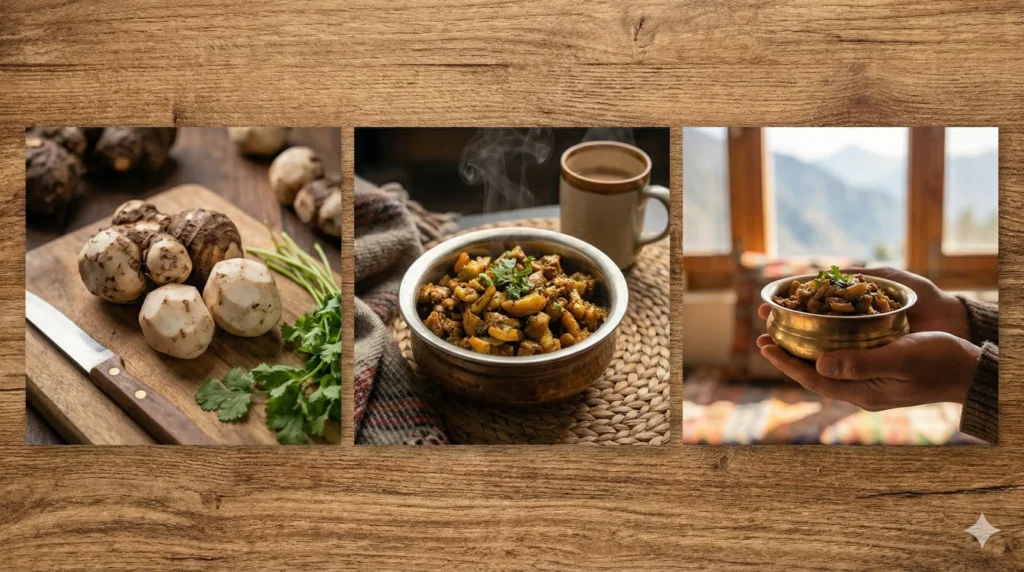
Unlike common store-bought potatoes, wild yams contain natural compounds that make them bitter—and sometimes slightly toxic—if eaten raw. They are starchy, nutrient-dense, and slightly slimy when cut.
To transform them into a delicacy, they must be boiled thoroughly to remove the bitterness. Once properly prepared, they have a unique, earthy flavor that is beloved in the mountains. The most famous way to eat it is prepared as a stir-fry known as “Taidu ke Gutke” (pictured in the video thumbnail!), a true taste of the Himalayas.
Have you ever gone foraging for wild food? Let us know in the comments below!