No products in the cart.
🌿 Restoring the Himalayas with Bioremediation: A Nature-First Approach to Soil, Water & Waste
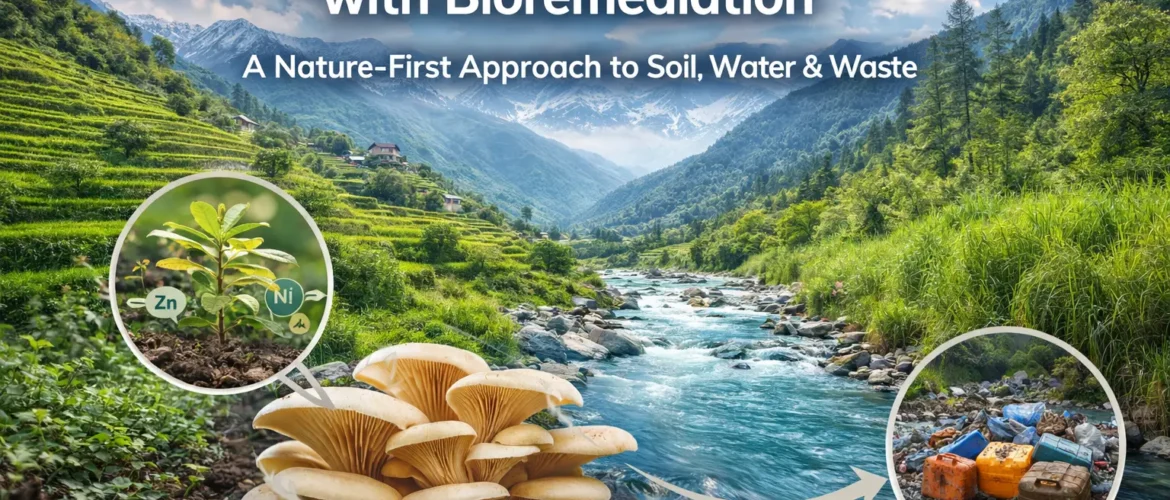
The Himalayan Crisis Needs a Nature-First Solution
The Himalayas are one of the most fragile and important ecosystems on Earth—yet they are facing increasing pressure from waste dumping, polluted waterways, and degraded soils.
Conventional solutions—heavy infrastructure, chemical treatments, centralized systems—simply don’t work in mountainous terrain.
What the Himalayas need is a nature-first, decentralized approach.
At HimFarms, we believe the answer lies in bioremediation—using natural systems like fungi and plants to restore ecological balance.
🌱 What is Bioremediation?
Bioremediation is the process of using living organisms—such as fungi, plants, and microbes—to break down pollutants and restore environmental health.
In the Himalayan context, it means:
- Using native species instead of imported solutions
- Building low-cost, decentralized systems
- Working with terrain, not against it
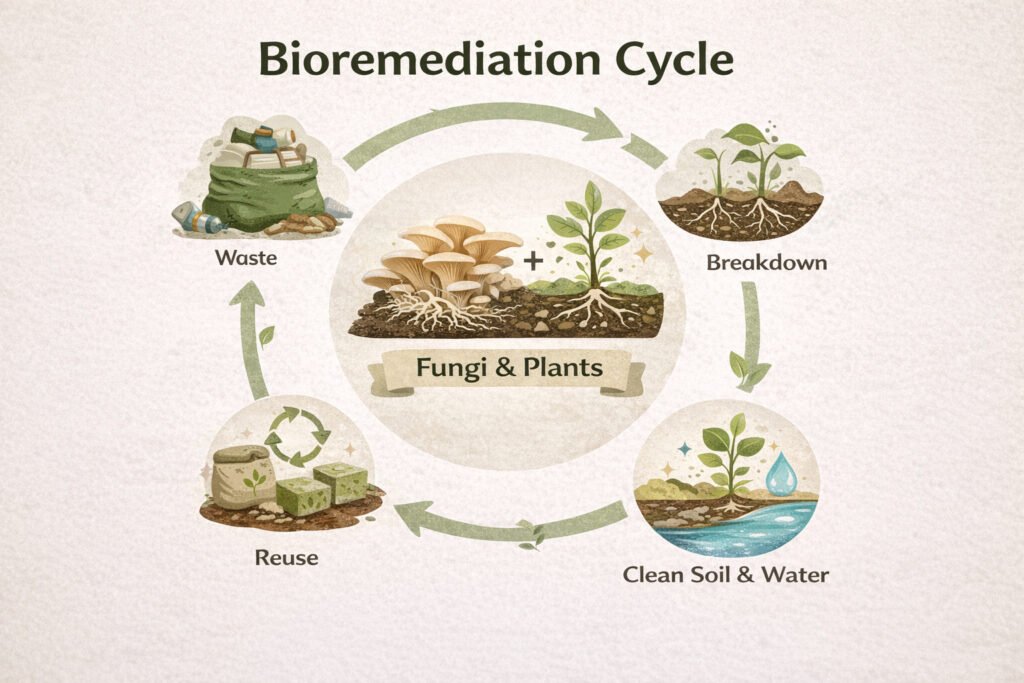
🍄 1. Mycoremediation: Turning Waste into Resources
What is Mycoremediation?
Mycoremediation uses fungi to decompose organic waste and pollutants.
Native Himalayan fungi like oyster mushrooms naturally break down:
- Agricultural waste
- Petroleum residues
- Organic pollutants
- Certain plastics
Why It Works in the Himalayas
- Requires no heavy infrastructure
- Can be implemented on-site (in situ)
- Works efficiently in cold, forest-like climates
Circular Economy Impact
Waste → Fungal Treatment → Biomass →
- Organic compost
- Soil enrichment
- Mycelium-based building materials
This transforms waste from a problem into a resource stream.
🌿 2. Phytoremediation: Natural Water & Soil Filtration
What is Phytoremediation?
Phytoremediation uses plants to absorb, filter, and detoxify pollutants from soil and water.
Key Applications in the Himalayas
1. Riverbank Protection
- Native grasses and shrubs act as natural filters
- Prevent pollutants from entering streams
2. Bio-Epuration Gardens
- Small-scale natural wastewater treatment systems
- Replace expensive chemical plants
- Require zero electricity
3. Mycofiltration Systems
- Fungal networks filter toxins from water
- Improve water quality naturally
Benefits
- Clean water systems
- Improved public health
- Restoration of aquatic ecosystems
⛰️ 3. Phytomining: Cleaning Soil While Creating Value
What is Phytomining?
Phytomining uses plants to extract heavy metals from contaminated soil.
Himalayan Opportunity
- Landslides and exposed slopes contain heavy metals
- Native plants can absorb these metals naturally
Process
- Grow hyperaccumulator plants
- Harvest biomass
- Convert into metal-rich bio-ore
Outcome
- Soil detoxification
- Revenue generation
- Circular rural economy
🌍 Why Bioremediation is the Future of the Himalayas
| Challenge | Conventional Approach | Nature-Based Solution |
|---|---|---|
| Waste | Dumping/Burning | Mycoremediation |
| Water Pollution | Chemical Treatment Plants | Phytoremediation |
| Soil Contamination | Excavation | Phytomining |
⏳ Slow Solutions, Long-Term Impact
Unlike chemical methods, bioremediation takes time.
But in fragile ecosystems like the Himalayas:
- Slow = Sustainable
- Natural = Resilient
- Decentralized = Scalable
This approach avoids toxic byproducts and allows ecosystems to regenerate naturally.
🌱 The HimFarms Approach
At HimFarms, we are building a regenerative ecosystem model focused on:
- Soil health & carbon restoration
- Farmer-led sustainability
- Natural farming systems
- Circular rural economies
Bioremediation is a key pillar in our mission to restore Himalayan ecosystems.
🤝 Collaborate With Us
Restoring the Himalayas requires collective action.
We invite collaboration from:
- Researchers & environmental scientists
- NGOs & policy institutions
- Climate-tech startups
- Farmers & community leaders
- Sustainability innovators
Let’s work together on:
- Soil restoration projects
- Water purification systems
- Waste-to-resource innovations
- Carbon & biodiversity initiatives
👉 Contact us at info@himfarms.com to collaborate.
FAQs
What is bioremediation in the Himalayas?
Bioremediation in the Himalayas involves using native plants, fungi, and microbes to restore polluted soil and water naturally.
Why is mycoremediation important?
It helps break down waste sustainably without harming soil health or requiring heavy infrastructure.
Can phytoremediation clean rivers?
Yes, plants and natural wetlands can filter pollutants and significantly improve water quality.
What is phytomining?
Phytomining uses plants to extract metals from soil, turning contamination into economic value.